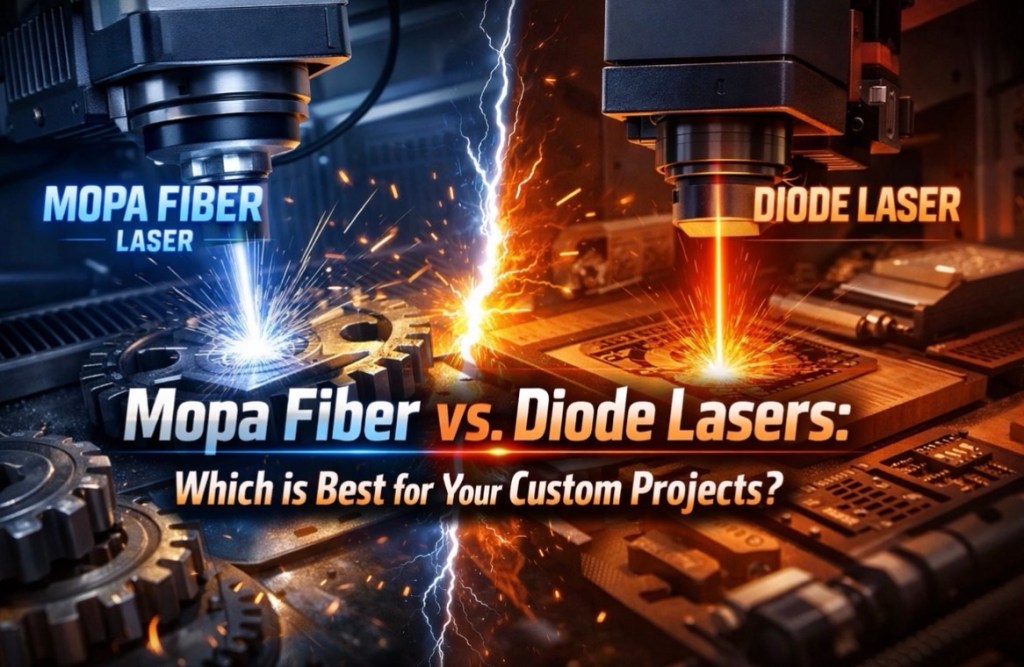
If you have ever stepped into our workshop at Crazy Chicks Embroidery & Laser Engraving LLC., you know that we are obsessed with precision. There is something almost magical about watching a beam of light transform a blank piece of wood, leather, or metal into a personalized masterpiece. But behind that “magic” is a lot of high-tech science.
One of the most common questions we get from clients and hobbyists alike is about the technology we use. Specifically, people want to know the difference between a Diode laser and a Fiber laser: especially the high-end MOPA Fiber lasers.
Choosing the right laser technology isn’t just about the price tag; it’s about what the machine can actually do to the material you’re working with. In this deep dive, we’re going to break down everything you need to know about MOPA Fiber and Diode lasers, the materials they handle, and which one reigns supreme for different custom projects.
Understanding the Diode Laser: The Versatile Entry Point
For many people entering the world of laser engraving, the Diode laser is their first introduction. These machines use light-emitting diodes to create a concentrated beam of light, usually in the visible spectrum (blue light, around 450nm).
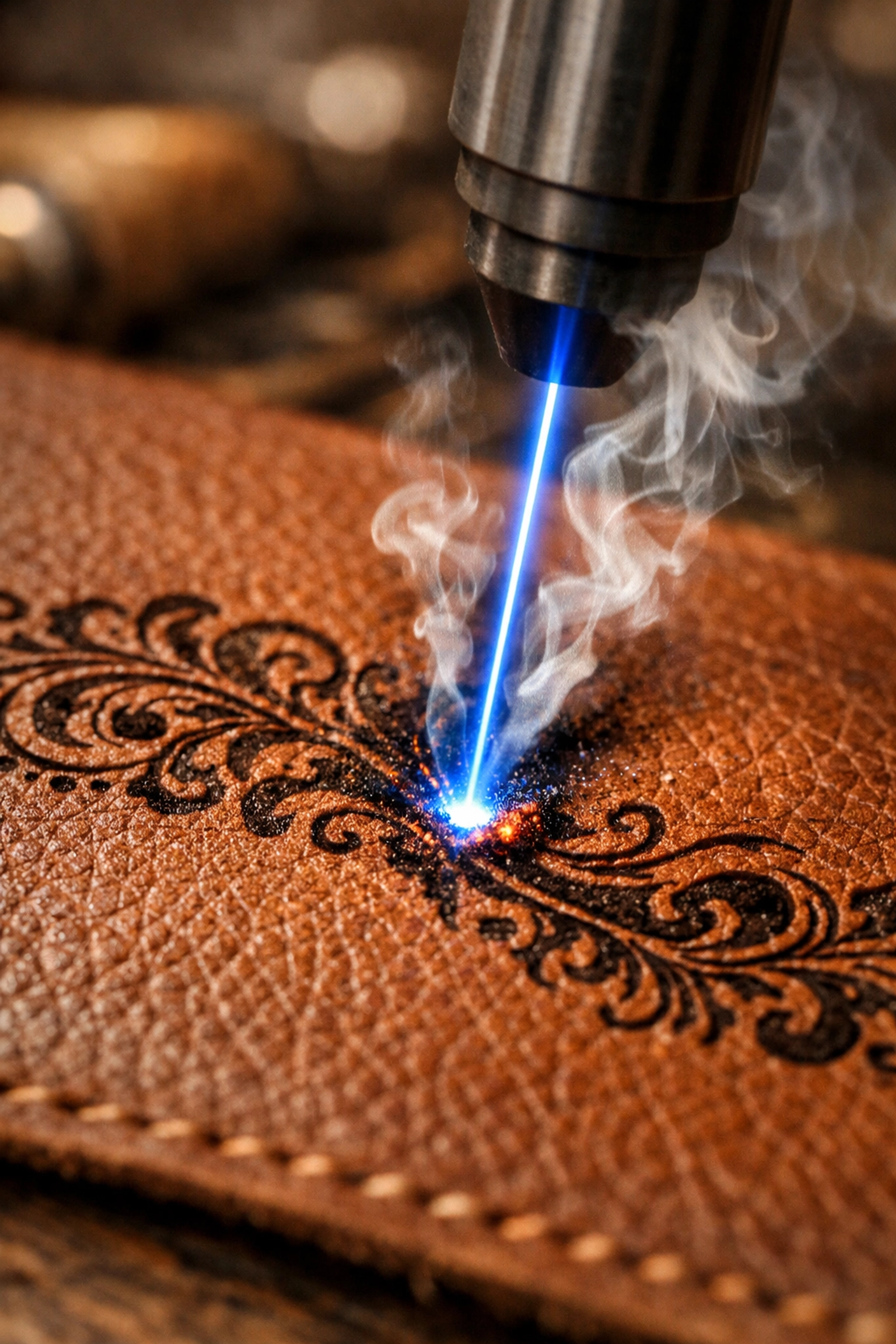
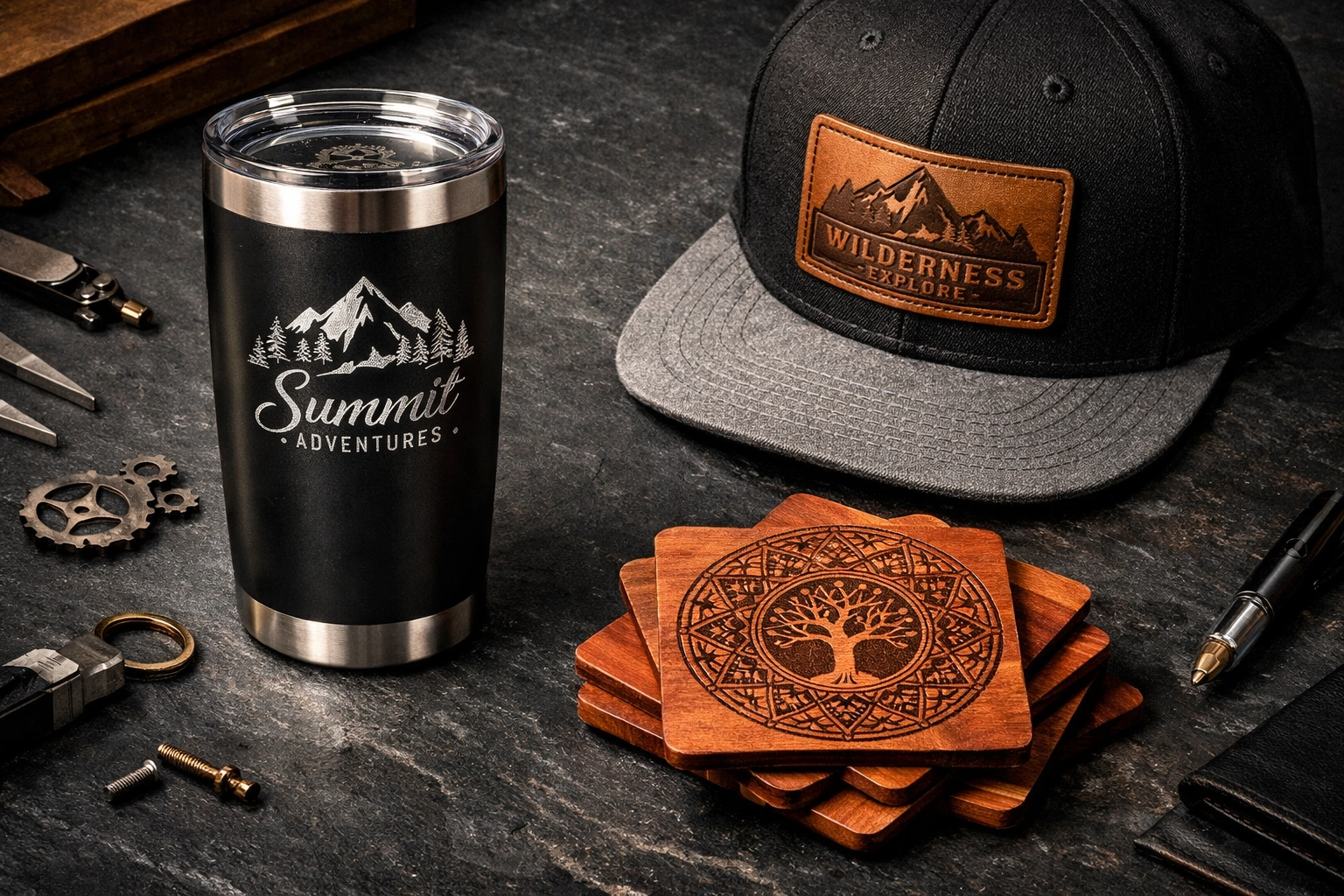
Diodes are fantastic for “organic” materials. Because of their wavelength, the energy is absorbed incredibly well by wood, leather, and certain plastics. If you’ve ever seen a beautiful charred-edge wooden sign or a custom leather patch on one of our hats, there’s a good chance a diode-style wavelength played a role in that process.
What Can a Diode Laser Do?
Diode lasers are excellent for engraving and light cutting. They are generally slower than their industrial Fiber counterparts, but they offer a level of accessibility that makes them popular for small businesses and hobbyists.
Common Materials for Diode Lasers:
- Wood: Plywood, MDF, hardwoods like oak or cherry.
- Leather: Real leather and high-quality leatherette (perfect for our custom patches!).
- Opaque Acrylic: Darker colors work best as the beam can pass right through clear acrylic.
- Paper and Cardboard: Great for intricate card designs or packaging.
However, the Diode has a major Achilles’ heel: bare metal. Because of the wavelength of a blue diode laser, metal surfaces act like a mirror, reflecting the energy away rather than absorbing it. To engrave metal with a diode, you often have to use a specialized marking spray or tape, which the laser then “bakes” onto the surface. It’s not a true deep engrave, but rather a surface mark.
The Powerhouse: What is a MOPA Fiber Laser?
Now, let’s talk about the heavy hitter in our arsenal. A Fiber laser uses an optical fiber cable doped with rare-earth elements as its gain medium. But we aren’t just talking about any fiber laser; we’re talking about MOPA (Master Oscillator Power Amplifier) technology.
Standard Fiber lasers (often called Q-switched lasers) have a fixed pulse duration. This means they hit the material with the same “thump” every time. While they are great for metal, they lack versatility.
MOPA Fiber lasers are different. They allow us to adjust the pulse duration (how long the laser stays on during each pulse). This control is a game-changer. It allows us to be incredibly aggressive for deep metal engraving or incredibly delicate for sensitive plastics.
The Secret Sauce: Color Marking
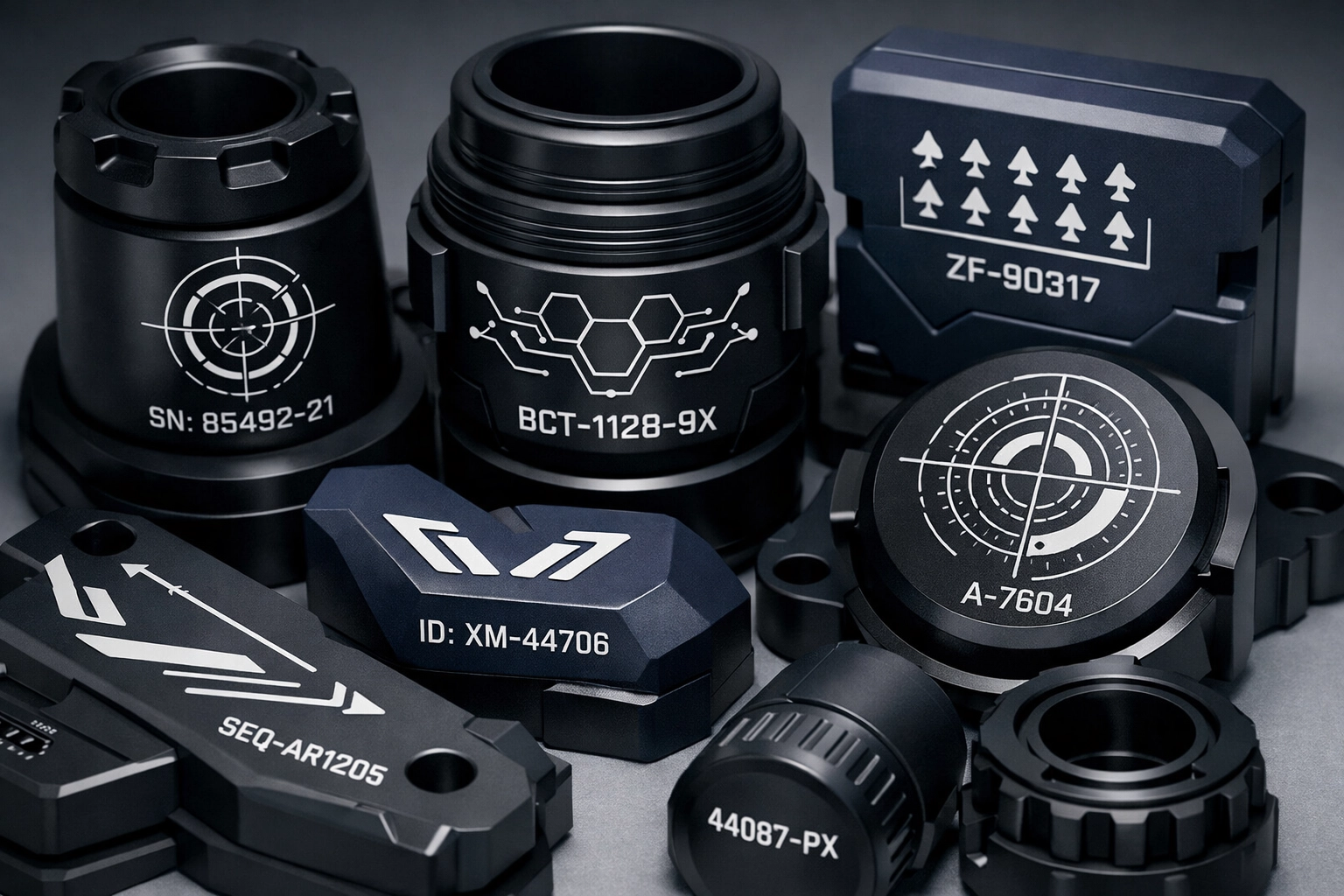
One of the most impressive things a MOPA Fiber laser can do: that a Diode or standard Fiber laser cannot: is color marking on stainless steel and titanium. By precisely controlling the pulse duration and frequency, the MOPA laser creates a controlled oxidation layer on the metal surface. This layer reflects light in different ways, creating various colors without any inks or chemicals. It’s permanent, beautiful, and strictly professional.
Material Breakdown: MOPA vs. Diode
To help you decide which technology fits your project needs, let’s look at how they handle specific materials.
1. Metals (The Fiber’s Kingdom)
If your project involves metal, the MOPA Fiber laser is the undisputed king.
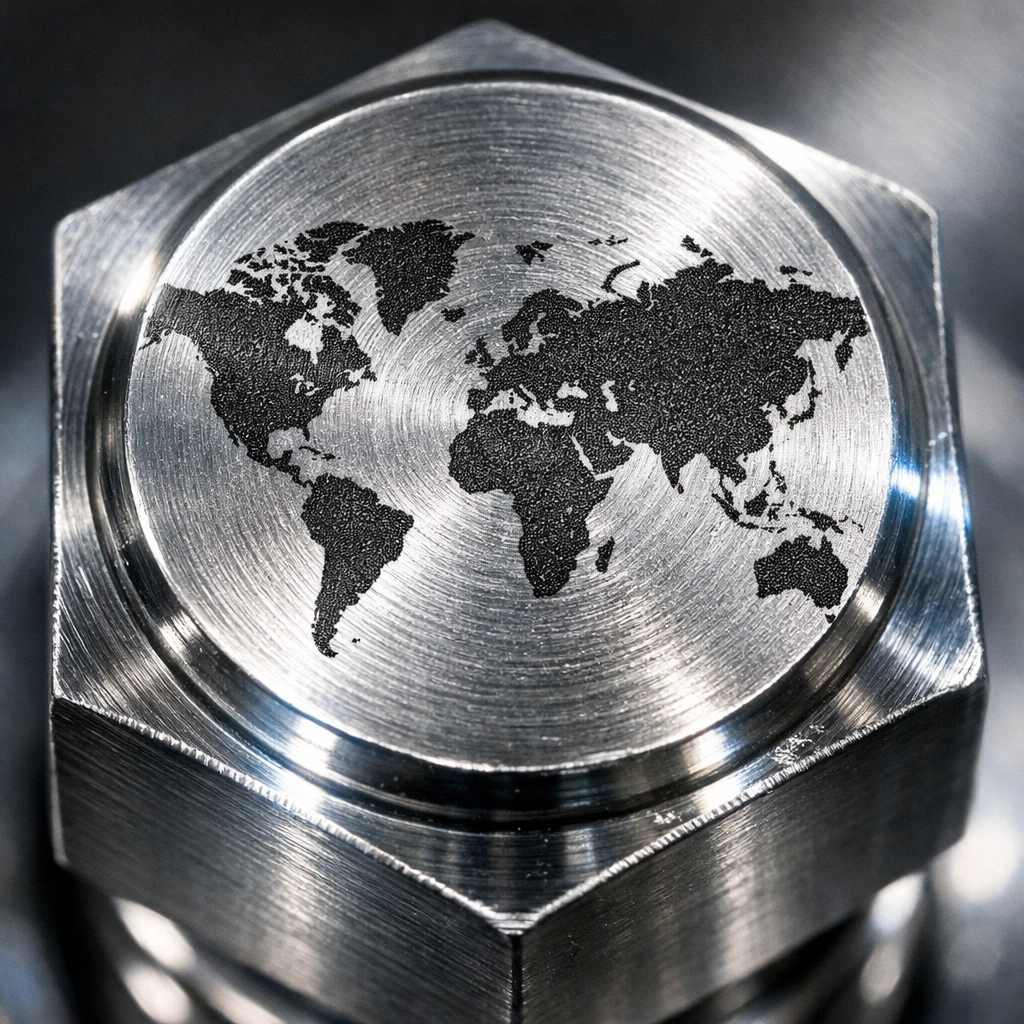
- Stainless Steel: MOPA can engrave deep, create high-contrast black marks, or even colors.
- Aluminum: It handles anodized and raw aluminum with ease.
- Brass and Copper: These are “highly reflective” metals that can actually damage some lasers, but a Fiber laser handles them safely.
- Gold and Silver: Perfect for high-end jewelry engraving.
A Diode laser, by contrast, will struggle here. You might get a faint mark on stainless steel if you use a coating, but you won’t get the longevity or depth that a MOPA provides.
2. Plastics and Polymers
This is where the MOPA really shines. Many plastics react poorly to heat. A standard laser might melt or char the plastic, leaving a messy, raised mark. Because a MOPA laser can use very short pulses, it can “cold mark” plastics. This results in a high-contrast, smooth finish that looks like it was printed on, but it will never rub off. Diodes can engrave certain dark plastics, but the results are often inconsistent.
3. Wood and Leather (The Diode’s Specialty)
Surprisingly, the high-tech Fiber laser is actually too specialized for wood. Most Fiber lasers operate at a 1064nm wavelength, which passes straight through wood and leather without doing much.
If you want that deep, rich, burnt-look on a cutting board or a custom leatherette patch, the Diode laser (or a CO2 laser) is actually the better tool. At Crazy Chicks Embroidery & Laser Engraving LLC., we match the machine to the material to ensure the best possible result.
Precision, Speed, and Longevity
When we look at these machines from a production standpoint, the differences become even more clear.
Speed:
Fiber lasers use a “Galvo” system, which means the laser beam is moved by tiny, incredibly fast mirrors. It can move at speeds of 7,000mm per second or more. A Diode laser usually sits on a gantry (a rail system) and moves a heavy laser head back and forth. This makes Fiber lasers significantly faster for marking: what takes a Diode ten minutes might take a Fiber laser thirty seconds.
Precision:
The spot size of a Fiber laser is incredibly small: often just a few microns. This allows for microscopic detail. We can engrave an entire paragraph of text onto the head of a screw using our MOPA Fiber. While Diodes are getting better, they simply cannot match that level of micro-precision.
Longevity:
Diode lasers are rated for about 20,000 to 50,000 hours of life. However, they can lose power over time. Fiber lasers are the tanks of the industry, often rated for 100,000 hours. They are built for 24/7 industrial use.
Which One is Best for Your Custom Project?
At the end of the day, the “best” laser depends entirely on what you want to create.
- Choose a Diode Laser Project if: You want beautiful, organic results on wood, leather, or dark-colored acrylic. It’s perfect for home decor, wedding signs, and leather patches where that classic “burned” aesthetic is desired.
- Choose a MOPA Fiber Laser Project if: You need branding on metal (tumblers, knives, tools), high-end jewelry engraving, color marking on steel, or permanent marking on industrial plastics. If durability and precision on hard materials are your top priorities, MOPA is the answer.
How Crazy Chicks Embroidery & Laser Engraving LLC. Can Help
We know that the technical jargon can be overwhelming. “Wavelengths,” “Pulse Durations,” and “Frequencies” are our daily language, but all you really need to know is that your project is in good hands.
Whether you are a small business owner looking to brand your tools with a MOPA Fiber laser, or you want custom-engraved wooden gifts for your family, we have the technology and the expertise to make it happen. We don’t just “hit print.” We carefully calibrate our settings based on the specific material to ensure that every engrave is crisp, clean, and exactly what you envisioned.
Final Thoughts
The world of laser engraving is evolving fast. While Diode lasers have opened the door for many creators, the MOPA Fiber laser represents the pinnacle of marking technology. By understanding the strengths of each, we can push the boundaries of what’s possible in the world of custom engraving.
Do you have a project in mind but aren’t sure which laser is right for the job? Reach out to us! We love talking shop and helping our clients figure out the best way to bring their ideas to life. Whether it’s leather, steel, or anything in between, we’ve got the beam for the job.
 crazychicks23
Leave a comment